If you’ve ever wondered how content creators, photographers, and makeup artists achieve that perfectly even, flattering glow in their work, the secret is often a simple yet powerful tool: the Ring Light. This is more than just a circular lamp; it’s a game-changer for anyone looking to eliminate harsh shadows and produce professional-quality images and videos. As a professional with over a decade of experience, I’ve seen this tool transform amateur setups into polished, high-end productions.
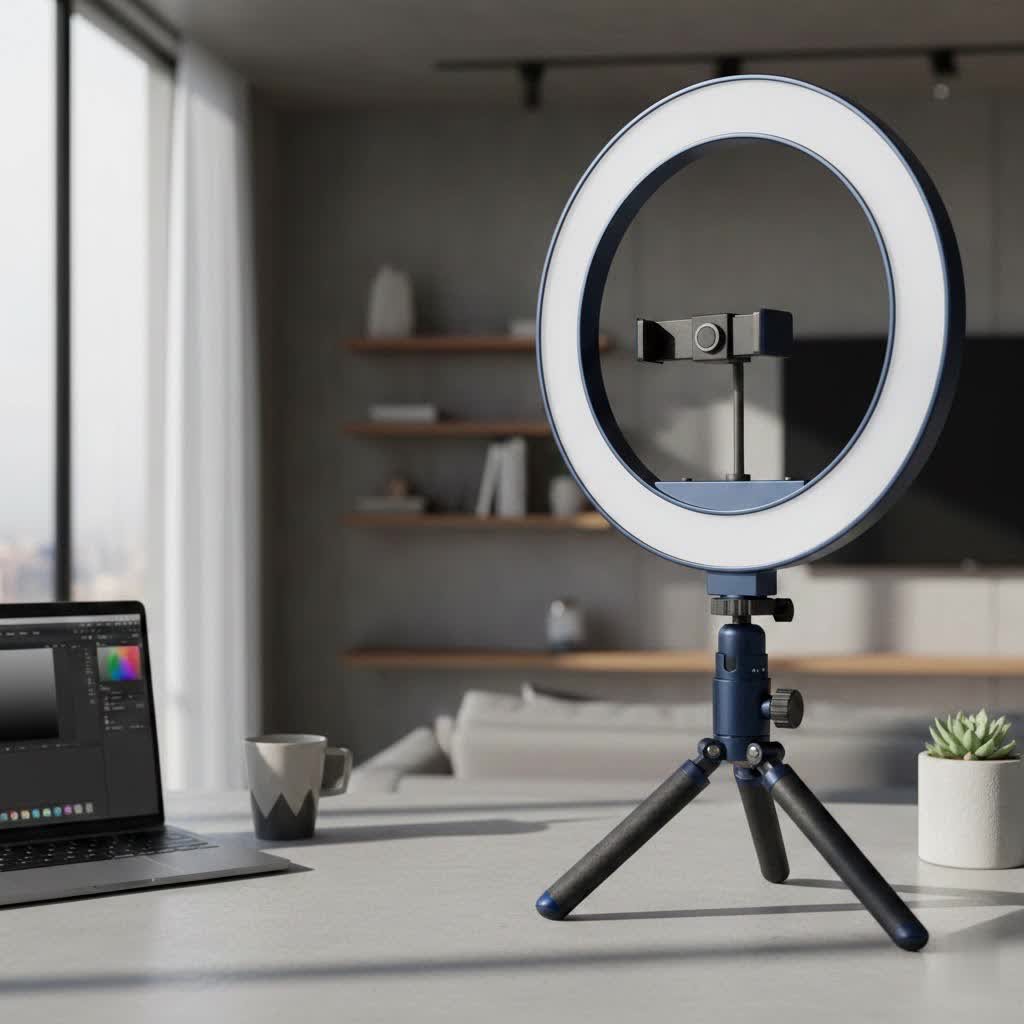
A ring light is designed to cast a uniform light onto a subject from the direction of the camera lens. This minimizes shadows, highlights details, and creates a signature “catchlight”—a circular reflection in the eyes that adds a spark of life to portraits. Whether you’re a streamer, a vlogger, a photographer, or just someone who wants to look their best on video calls, understanding how to select and use a ring light is an essential skill.
What Makes a Ring Light So Effective?
The magic of a ring light lies in its circular design. By placing your camera or smartphone in the center of the ring, the light source surrounds the lens, bathing your subject in a soft, direct light. This unique setup effectively eliminates the harsh shadows that a single, off-axis light source would create. It smooths out skin texture, makes colors appear more vibrant, and provides that sought-after, professional look with minimal effort.
How to Choose the Perfect Ring Light
With so many options on the market, choosing the right ring light can feel overwhelming. The key is to match the specifications to your specific needs. Let’s break down the most important factors to consider.
Size and Power: Does Bigger Mean Better?
The size of a ring light, measured by its diameter, directly impacts the softness and spread of the light.
- Small Ring Lights (6-10 inches): These are perfect for close-ups, makeup application, and video conferencing. They are highly portable and ideal for lighting a single person from the chest up.
- Medium Ring Lights (12-14 inches): A versatile option, these lights are great for half-body shots, portraits, and small product photography. They offer a good balance between power and portability.
- Large Ring Lights (18 inches and up): If you need to light a larger area or multiple people, a large ring light is your best bet. It produces the softest, most flattering light and is the standard choice for professional photo shoots and video production.
|
Our Picks for the Best Ring Light in 2026
As an Amazon Associate I earn from qualifying purchases.
|
||
| Num | Product | Action |
|---|---|---|
| 1 | Aureday 14\'\' Selfie Ring Light with 62\'\' Tripod Stand and Phone Holder, Dimmable LED Phone Ringlight for Makeup/Video Recording/Photography, Circle Lighting for All Cell Phones&Lightweight Cameras |

|
| 2 | Upgraded Ring Light for Laptop, Monitor, Desk & Phone – Eye-Caring LED Webcam Light with Screen-Safe Clip, Adjustable Monitor Mount, 50 Lighting Modes, Computer Light for Zoom, Streaming, Video Calls |
|
| 3 | NEEWER Basics 10\" Selfie Ring Light with Tripod Stand/3 Phone Holders Compatible with iPhone/3 Cold Shoes/Remote, LED Ringlight Lighting for YouTube TikTok Vlog Video Recording Makeup Streaming, R11 |
|
| 4 | 10\" Selfie Ring Light with 73\" Tripod Stand & 1 Phone Holder, LED Camera Ringlight with 48 RGB Colors Modes & Musical Rhythm Mode and 12 Brightness Dimmable for TikTok/Makeup/Photography/Vlog |
|
| 5 | UBeesize 12\'\' Selfie Ring Light with 62’’ Tripod Stand for Video Recording, Live Streaming(YouTube, Instagram, TIK Tok), Compatible with Phones, Cameras and Webcams |
|
| 6 | Sensyne 10\'\' Ring Light with 50\'\' Extendable Tripod Stand, LED Circle Lights with Phone Holder for Live Stream/Makeup/YouTube Video/TikTok, Compatible with All Phones |
|
| 7 | STALLY 10.2\" Ring Light with Stand, 75\" Tall Ring Light with Phone Holder and Wireless Remote, 12 Dimming Levels, 32 Color Modes Selfie Light Tripod for iPhone, Live Stream, Makeup, YouTube, TikTok |
|
| 8 | Weilisi 12\'\' Ring Light with Stand 72\'\' Tall & 2 Phone Holders,38 Color Modes Selfie Light with Tripod Stand, Big LED Ring Light for iPhone/Android/Camera,YouTube,Makeup |
|
| 9 | Weilisi 10\" Ring Light with Stand 72\'\' Tall & Phone Holder,38 Color Modes Selfie Light with Tripod Stand,Stepless Dimmable/Speed LED Ring Light for iPhone & Android,YouTube, Makeup,TIK Tok |
|
| 10 | EMART 10\" Ring Light with 55\" Extendable Tripod Stands and Phone Holder, Dimmable LED Circle Round Light for Selfie Camera Photography/Makeup/YouTube Video/Vlogging/Live Streaming |
|
Power, measured in watts or lumens, determines brightness. A higher wattage or lumen count means a brighter light, which is crucial for overpowering other ambient light sources in a room.
Color Temperature and Brightness Control
The ability to control your light is non-negotiable. Look for a ring light with adjustable settings.
- Brightness (Dimming): Almost all modern ring lights are dimmable, allowing you to control the intensity from a subtle glow to a powerful beam. This is essential for balancing the light with your environment and achieving the desired mood.
- Color Temperature: This refers to how warm (yellow) or cool (blue) the light appears, measured in Kelvin (K). A good ring light should offer a range from at least 3200K (warm, like a traditional lightbulb) to 5600K (cool, like natural daylight). This flexibility allows you to match the light to other sources in your room or create specific creative effects.
CRI (Color Rendering Index): The Secret to True Colors
CRI is a measure of how accurately a light source reveals the true colors of an object compared to natural light. For any work involving color—like makeup, art, or product photography—a high CRI is critical. Look for a ring light with a CRI of 90 or higher to ensure that your reds look red and your blues look blue, without any strange color cast.
Common Types of Ring Lights
While the basic principle is the same, ring lights come in a few different variations, each with its own advantages.
LED Ring Lights
This is the most popular and modern type. LED ring lights are energy-efficient, long-lasting, and produce very little heat, making them comfortable for long sessions. They offer excellent dimming capabilities and often come with adjustable color temperature and even RGB color options for creative lighting.
Fluorescent Ring Lights
An older technology, fluorescent ring lights were once the industry standard. They produce a soft, pleasing light but are more fragile, can flicker on camera if not high-quality, and are not typically dimmable without specialized hardware. While still functional, they have largely been surpassed by the versatility of LED models.
RGB Ring Lights
For content creators looking to add a splash of color, RGB ring lights are the ultimate creative tool. In addition to standard warm and cool white light, these models can produce millions of different colors. They are perfect for creating mood lighting, colorful backdrops, or special effects in videos for platforms like TikTok and YouTube.
Pro Tips for Using Your Ring Light Effectively
Owning a ring light is one thing; knowing how to use it is another. A few simple adjustments can take your lighting from good to great.
“The biggest mistake I see is placing the ring light too far away or too low. For that flawless makeup look, you want the light directly in front of the face, just above eye level. This fills in any lines and makes the eyes pop.”
— Jasmine Hayes, Professional Makeup Artist & Beauty Influencer
1. Positioning for Flattering Portraits
For the classic shadowless look, position the light directly in front of your subject with the camera shooting through the middle. Adjust the height so the center of the light is at eye level. This will create those beautiful, circular catchlights and provide even illumination.
2. Using it as a Fill Light
A ring light doesn’t always have to be your main light source (key light). In a multi-light setup, it can serve as an excellent fill light. Place it off to the side, opposite your key light, and set it to a lower intensity. This will soften any harsh shadows created by your main light without completely eliminating them, adding depth and dimension to the shot.
3. Getting Creative with Angles
Don’t be afraid to experiment! Try raising the light high and angling it down for a dramatic “butterfly” lighting effect. Or, position it slightly to one side to create soft, gentle shadows that can help contour a face or define a product’s shape.
Essential Ring Light Accessories
To get the most out of your setup, you’ll need a few key accessories.
- Tripod Stand: A sturdy, adjustable stand is a must. It allows you to position your light at the perfect height and angle and keep it stable.
- Phone and Camera Mounts: Most ring lights come with a mount to hold your smartphone or a DSLR camera securely in the center of the ring.
- Color Gels/Filters: Some kits include snap-on filters that can alter the color or diffuse the light, giving you more creative options.
- Carrying Case: If you plan to travel with your light, a padded carrying case is essential for protecting it from damage.
Frequently Asked Questions (FAQ)
What is the best size ring light for Zoom calls?
For video conferencing like Zoom or Skype, a smaller desktop ring light between 8 and 12 inches is typically sufficient. It provides ample light for a head-and-shoulders shot without taking up too much space on your desk.
Can a ring light damage your eyes?
When used correctly, LED ring lights are safe and do not emit harmful UV radiation. However, staring directly into any bright light for a prolonged period can cause eye strain. It’s best to use the dimming feature to set the brightness to a comfortable level and take regular breaks during long sessions.
How do I stop glare on my glasses from a ring light?
To reduce glare on glasses, try raising the ring light higher than your eye level and angling it slightly downward. You can also move the light slightly off to one side instead of having it directly in front of you. This changes the angle of reflection and can significantly reduce or eliminate the glare.
Is a ring light good for product photography?
Yes, a ring light can be excellent for product photography, especially for small, detailed items. It provides an even, shadowless light that can make products look clean and professional. It is particularly effective for flat-lay photography.
Do I need a ring light if I have a window?
Natural light from a window is fantastic, but it’s inconsistent. It changes throughout the day and disappears at night. A ring light gives you complete control over your lighting, ensuring a consistent, professional look no matter the time of day or weather conditions.
Your Partner in Perfect Lighting
A ring light is one of the most valuable and versatile investments you can make to improve the quality of your photos and videos. It provides soft, flattering illumination that was once only achievable with complex, expensive equipment. By understanding the key features like size, color temperature, and CRI, you can confidently choose a model that fits your needs and budget.
Now that you’re armed with this knowledge, you can move beyond simply lighting a subject and start shaping the light to tell your story. Experiment with different angles, play with color and brightness, and see how this simple tool can elevate your creative work.
