When you’re ready to elevate your content from amateur to amazing, the lighting you use is non-negotiable. While any ring light can brighten a scene, a Professional Ring Light is an entirely different class of tool, designed for nuance, reliability, and flawless results. Whether you’re a photographer, videographer, or makeup artist, understanding what separates a basic model from a professional one is the key to unlocking your creative potential. This guide will walk you through everything you need to know to invest in the right gear.
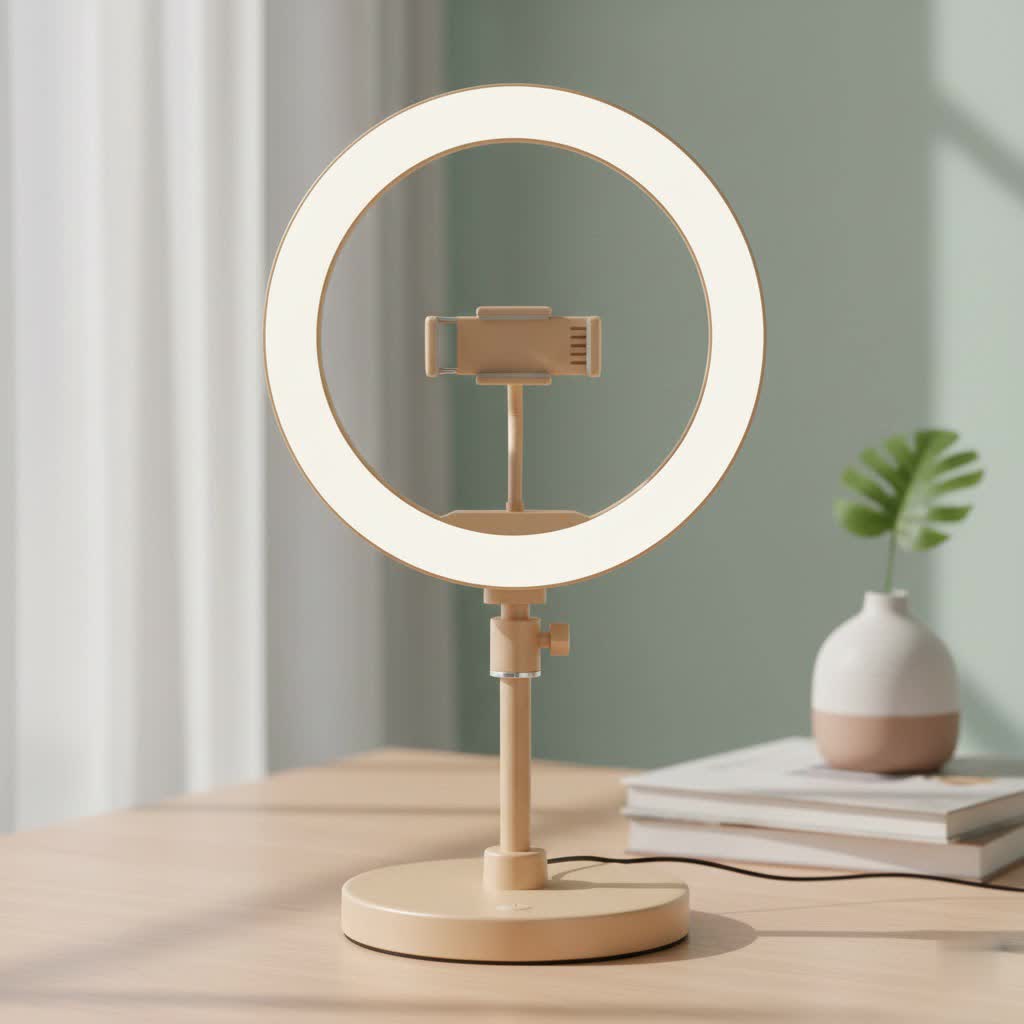
Key Features of a Professional Ring Light
Not all ring lights are created equal. Professional-grade models come equipped with specific features designed to provide maximum control and superior light quality. When you’re shopping for a professional ring light, these are the critical specifications to look for.
Size and Power Output
|
Our Picks for the Best Ring Light in 2026
As an Amazon Associate I earn from qualifying purchases.
|
||
| Num | Product | Action |
|---|---|---|
| 1 | Aureday 14\'\' Selfie Ring Light with 62\'\' Tripod Stand and Phone Holder, Dimmable LED Phone Ringlight for Makeup/Video Recording/Photography, Circle Lighting for All Cell Phones&Lightweight Cameras |

|
| 2 | STALLY 10.2\" Ring Light with Stand, 75\" Tall Ring Light with Phone Holder and Wireless Remote, 12 Dimming Levels, 32 Color Modes Selfie Light Tripod for iPhone, Live Stream, Makeup, YouTube, TikTok |
|
| 3 | Weilisi 10\" Ring Light with Stand 72\'\' Tall & Phone Holder,38 Color Modes Selfie Light with Tripod Stand,Stepless Dimmable/Speed LED Ring Light for iPhone & Android,YouTube, Makeup,TIK Tok |
|
| 4 | Sensyne 10\'\' Ring Light with 50\'\' Extendable Tripod Stand, LED Circle Lights with Phone Holder for Live Stream/Makeup/YouTube Video/TikTok, Compatible with All Phones |
|
| 5 | UBeesize 12\'\' Selfie Ring Light with 62’’ Tripod Stand for Video Recording, Live Streaming(YouTube, Instagram, TIK Tok), Compatible with Phones, Cameras and Webcams |
|
| 6 | Upgraded Ring Light for Laptop, Monitor, Desk & Phone – Eye-Caring LED Webcam Light with Screen-Safe Clip, Adjustable Monitor Mount, 50 Lighting Modes, Computer Light for Zoom, Streaming, Video Calls |
|
| 7 | Weilisi 12\'\' Ring Light with Stand 72\'\' Tall & 2 Phone Holders,38 Color Modes Selfie Light with Tripod Stand, Big LED Ring Light for iPhone/Android/Camera,YouTube,Makeup |
|
| 8 | EMART 10\" Ring Light with 55\" Extendable Tripod Stands and Phone Holder, Dimmable LED Circle Round Light for Selfie Camera Photography/Makeup/YouTube Video/Vlogging/Live Streaming |
|
| 9 | NEEWER Basics 10\" Selfie Ring Light with Tripod Stand/3 Phone Holders Compatible with iPhone/3 Cold Shoes/Remote, LED Ringlight Lighting for YouTube TikTok Vlog Video Recording Makeup Streaming, R11 |
|
| 10 | 10\" Selfie Ring Light with 73\" Tripod Stand & 1 Phone Holder, LED Camera Ringlight with 48 RGB Colors Modes & Musical Rhythm Mode and 12 Brightness Dimmable for TikTok/Makeup/Photography/Vlog |
|
In the world of lighting, size matters. A larger ring light, typically 18 inches or more in diameter, produces a softer, more flattering light that can wrap around a subject. This minimizes harsh shadows and is ideal for headshots and portraiture. Power, measured in lumens or watts, is equally important. A professional unit will offer significant brightness that can overpower other ambient light sources, giving you complete control over your lighting environment.
Color Accuracy (CRI & TLCI)
This is arguably the most crucial feature of a professional-grade light. The Color Rendering Index (CRI) measures how accurately a light source reveals the true colors of a subject compared to natural sunlight. For professional work, you should look for a CRI of 95 or higher. A high CRI ensures that skin tones look natural, makeup colors are accurate, and product photography is true-to-life.
“A light with a low CRI can make a vibrant red look dull or shift skin tones to an unflattering green or magenta hue,” notes commercial photographer Isabella Chen. “A CRI of 95+ is my baseline. It saves me hours in post-production color correction.”
Similarly, the Television Lighting Consistency Index (TLCI) is a standard used for video production. Like CRI, it measures color accuracy, and a score of 95+ is the professional benchmark to avoid color issues in your footage.
Adjustable Color Temperature
The ability to change the color temperature of your light is a game-changer. This feature, often called “bi-color,” allows you to adjust the light from a warm, orange-toned hue (around 3200K) to a cool, blue-toned daylight (around 5600K) and everything in between. This flexibility enables you to:
- Match the existing ambient light in a room.
- Create specific moods for your photos or videos.
- Accurately light for different skin tones.
A professional ring light provides precise, step-less control over this range, unlike cheaper models that often have only three fixed settings.
Build Quality and Durability
Professional equipment is an investment, and it needs to withstand the rigors of regular use. High-end ring lights are constructed from durable materials like aluminum alloy instead of flimsy plastic. They feature robust, stable stands that won’t wobble or tip over easily. The mounting points for cameras and smartphones are also more secure, and the unit will have better heat dissipation to ensure a long lifespan for the LEDs.
Versatile Power Options
While most ring lights can be plugged into a wall outlet (AC power), a truly professional model often includes the option for battery power (DC power). This is essential for on-location shoots where power outlets may be unavailable. The ability to work untethered gives you the freedom to create anywhere, from an outdoor portrait session to a client’s home for a makeup appointment.
How to Choose the Right Professional Ring Light
Your specific needs will dictate which model is best for you. While many features are universally beneficial, certain professions prioritize different aspects of a light’s performance.
For Portrait Photographers
Photographers need a light that produces soft, beautiful illumination and iconic, circular catchlights in the subject’s eyes. An 18-inch or larger ring light with a high CRI (97+) and excellent diffusion is ideal. Look for a model that comes with a sturdy stand and a reliable mount to hold a DSLR or mirrorless camera in the center of the ring.
For Videographers and Content Creators
Flicker-free performance is a must-have for anyone shooting video. Cheaper lights can produce a subtle, invisible flicker that is captured by a camera, ruining footage. A professional ring light is engineered to provide clean, consistent output. Videographers will also benefit from bi-color adjustability, battery power options for filming on the go, and quiet, fan-less operation so as not to interfere with audio recording.
For Makeup Artists and Estheticians
Color accuracy is paramount for makeup artists. A light with a high CRI (95+) and adjustable color temperature ensures you can see how makeup will look in different environments, from warm indoor lighting to cool daylight. A large, bright ring light eliminates all facial shadows, allowing for precise and symmetrical application. Many artists also prefer models with built-in mirrors or easy-to-attach smartphone holders for creating content.
Frequently Asked Questions (FAQ)
What size ring light is considered professional?
Generally, ring lights with a diameter of 18 inches or larger are considered professional. This size is capable of producing broad, soft light that is suitable for illuminating more than just a close-up of a face, making it versatile for portraits, half-body shots, and product work.
Is a higher CRI always better?
Yes, for any work involving color accuracy, a higher CRI is always better. A CRI of 95 or above is the professional standard. Anything lower can lead to inaccurate color representation, which is particularly problematic for photography, videography, and makeup application.
Can I use a professional ring light for casual Zoom calls?
Absolutely! While it might be overkill, using a professional ring light for video calls will provide the best possible lighting. You can dim the light and adjust the color temperature to a soft, warm setting for a natural and flattering look that far surpasses standard webcam lights.
How much should I expect to spend on a professional model?
Prices can vary significantly, but you should expect to invest between $150 and $500 for a high-quality, professional-grade ring light. The price depends on the size, feature set, build quality, and brand reputation. Remember, this is an investment in the quality of your work.
Are LED ring lights better than fluorescent ones?
Yes, LED technology has largely surpassed fluorescent. LED ring lights are more energy-efficient, offer a longer lifespan, are more durable, and provide superior features like dimmability and bi-color temperature control without needing to change bulbs or filters.
Conclusion
Upgrading to a professional ring light is about gaining complete control over your creative vision. It’s about ensuring that what you see in person is what you capture with your camera. By focusing on the key features—size, color accuracy, adjustable temperature, and build quality—you can confidently choose a tool that will not only improve the quality of your work but also streamline your process. Armed with this knowledge, you are ready to make a smart investment and let your talent truly shine.
