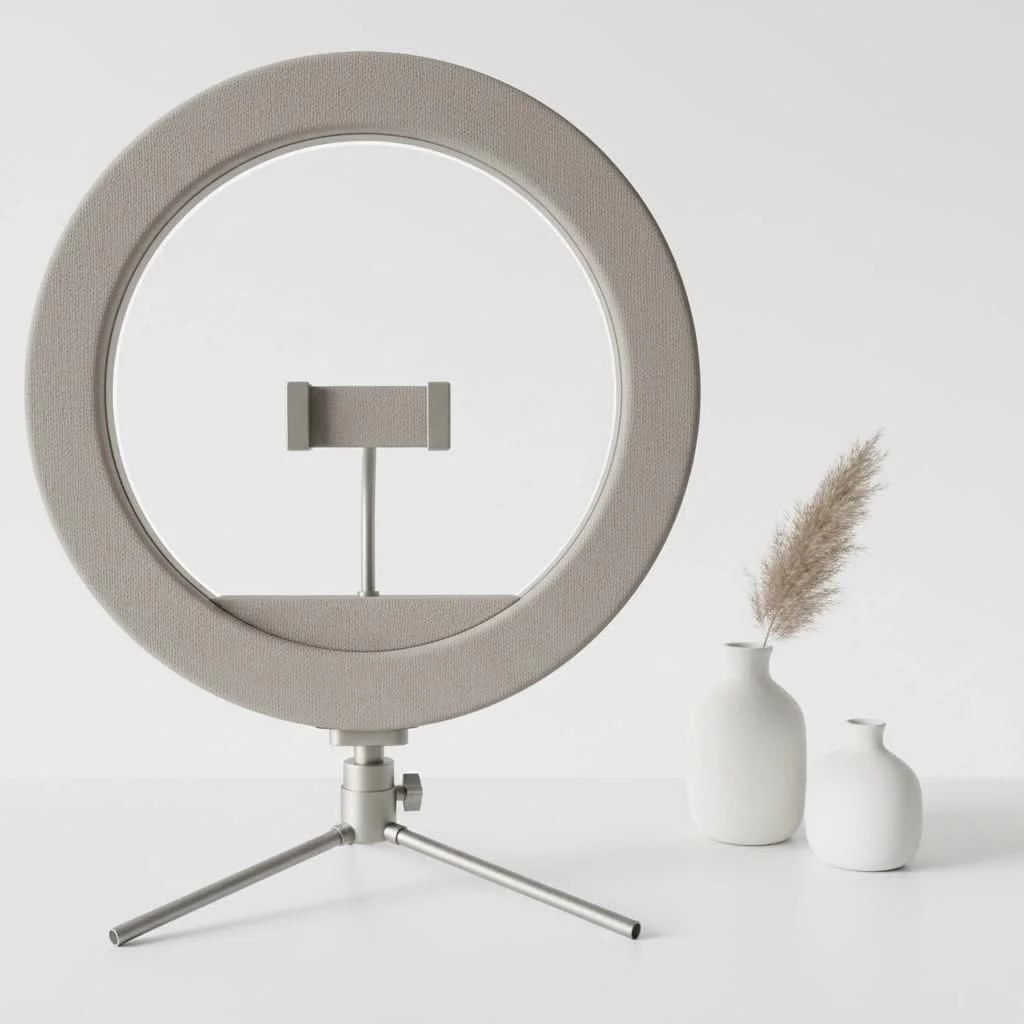
The ring light is a circular lighting tool that evenly distributes light onto a subject, making it indispensable for content creators, streamers, and makeup artists seeking a professional, shadowless glow. Its unique design allows a camera or smartphone to be placed in the center, eliminating harsh shadows and creating an attractive circular catchlight in the eyes. This guide will help you choose and use the perfect ring light for picture-perfect results.
As the lead creator at Xmixi, with over a decade of experience in professional studios, I’ve seen firsthand how the right light can transform good content into great content. This guide will demystify the ring light, breaking down everything you need to know—from choosing the right one to using it like a pro.
What Exactly Is a Ring Light?
A ring light is a circular lighting tool that distributes light evenly onto a subject. Its unique donut shape is designed to have a camera or smartphone placed in the center, allowing the light to wrap around the lens. This design eliminates harsh shadows, reduces blemishes, and creates that iconic, attractive catchlight—a circular reflection—in the subject’s eyes. It provides a soft, diffused glow that is flattering for virtually any face, making it an indispensable tool for portraiture, vlogging, and beauty tutorials.
The Different Types of Ring Lights Explained
While all ring lights share the same basic shape, they are not all created equal. Understanding the different types is key to selecting one that fits your specific needs and budget.
LED Ring Lights
The most popular and modern choice, LED (Light Emitting Diode) ring lights dominate the market for several good reasons. They are energy-efficient, have a long lifespan, and run cool to the touch, which is crucial for long recording sessions or makeup application. Most importantly, LED models offer incredible versatility, often featuring adjustable brightness (dimmability) and color temperature controls, allowing you to switch between warm, cool, and neutral tones seamlessly.
Fluorescent Ring Lights
Before LEDs became the standard, fluorescent ring lights were the go-to option. They produce a soft, pleasing light and are generally more affordable than their LED counterparts. However, they have some drawbacks. Fluorescent bulbs are more fragile, can flicker on camera if not high quality, and may produce a slight buzzing sound. They also take a moment to reach full brightness and aren’t typically dimmable.
RGB Ring Lights
For the creative content creator, the RGB ring light is a major upgrade. “RGB” stands for Red, Green, and Blue. These lights can produce a vast spectrum of colors in addition to standard white light. If you want to create dynamic, colorful backgrounds, set a specific mood for a stream, or add creative flair to your photos and videos, an RGB ring light offers a playground of possibilities at your fingertips, usually controlled via a remote or smartphone app.
How to Choose the Perfect Ring Light for You
With so many options available, choosing the right ring light can feel overwhelming. Let’s focus on the key factors to consider to ensure you make the right investment.
Size Matters: Which Diameter is Right?
|
Our Picks for the Best Ring Light in 2026
As an Amazon Associate I earn from qualifying purchases.
|
||
| Num | Product | Action |
|---|---|---|
| 1 | 10\" Selfie Ring Light with 73\" Tripod Stand & 1 Phone Holder, LED Camera Ringlight with 48 RGB Colors Modes & Musical Rhythm Mode and 12 Brightness Dimmable for TikTok/Makeup/Photography/Vlog |

|
| 2 | Sensyne 10\'\' Ring Light with 50\'\' Extendable Tripod Stand, LED Circle Lights with Phone Holder for Live Stream/Makeup/YouTube Video/TikTok, Compatible with All Phones |
|
| 3 | Upgraded Ring Light for Laptop, Monitor, Desk & Phone – Eye-Caring LED Webcam Light with Screen-Safe Clip, Adjustable Monitor Mount, 50 Lighting Modes, Computer Light for Zoom, Streaming, Video Calls |
|
| 4 | STALLY 10.2\" Ring Light with Stand, 75\" Tall Ring Light with Phone Holder and Wireless Remote, 12 Dimming Levels, 32 Color Modes Selfie Light Tripod for iPhone, Live Stream, Makeup, YouTube, TikTok |
|
| 5 | Aureday 14\'\' Selfie Ring Light with 62\'\' Tripod Stand and Phone Holder, Dimmable LED Phone Ringlight for Makeup/Video Recording/Photography, Circle Lighting for All Cell Phones&Lightweight Cameras |
|
| 6 | Weilisi 10\" Ring Light with Stand 72\'\' Tall & Phone Holder,38 Color Modes Selfie Light with Tripod Stand,Stepless Dimmable/Speed LED Ring Light for iPhone & Android,YouTube, Makeup,TIK Tok |
|
| 7 | Weilisi 12\'\' Ring Light with Stand 72\'\' Tall & 2 Phone Holders,38 Color Modes Selfie Light with Tripod Stand, Big LED Ring Light for iPhone/Android/Camera,YouTube,Makeup |
|
| 8 | EMART 10\" Ring Light with 55\" Extendable Tripod Stands and Phone Holder, Dimmable LED Circle Round Light for Selfie Camera Photography/Makeup/YouTube Video/Vlogging/Live Streaming |
|
| 9 | UBeesize 12\'\' Selfie Ring Light with 62’’ Tripod Stand for Video Recording, Live Streaming(YouTube, Instagram, TIK Tok), Compatible with Phones, Cameras and Webcams |
|
| 10 | NEEWER Basics 10\" Selfie Ring Light with Tripod Stand/3 Phone Holders Compatible with iPhone/3 Cold Shoes/Remote, LED Ringlight Lighting for YouTube TikTok Vlog Video Recording Makeup Streaming, R11 |
|
The size of a ring light, measured by its diameter, directly impacts the softness and spread of the light.
- Small (6-10 inches): Perfect for selfies, close-up makeup application, and video calls on a laptop. They are portable and great for head-and-shoulders shots but may be too small for lighting a larger area.
- Medium (12-14 inches): A versatile sweet spot for many users. These are large enough for half-body shots, detailed tutorials, and small product photography while remaining relatively easy to set up and store.
- Large (18 inches and up): The professional standard. These lights provide the softest, most flattering light and can illuminate a full person or a small set. They are ideal for professional photography studios, serious streamers, and anyone needing maximum light coverage.
Key Technical Specs to Understand
Don’t get lost in the jargon. Here are the most important technical specifications to look for when evaluating a ring light.
Brightness (Lumens)
Brightness, measured in lumens, determines how powerful the light is. More lumens mean more light output. For most uses, a ring light with adjustable brightness is essential. This allows you to dial in the perfect amount of light for any environment, whether you’re shooting in a dark room or just need a little fill light on a sunny day.
“A common mistake beginners make is thinking brighter is always better,” notes professional photographer Michael Chen. “The real magic is in control. A dimmable ring light gives you the flexibility to add just the right kiss of light without blowing out your highlights.”
Color Temperature (Kelvin)
Color temperature, measured in Kelvin (K), refers to the warmth or coolness of the white light.
- Warm Light (2700K – 3300K): Creates a cozy, inviting, golden-hour look.
- Neutral/Daylight (4000K – 5500K): Mimics natural daylight and is the most common setting for tutorials and professional video.
- Cool Light (5600K – 6500K): Produces a crisp, modern, almost blueish light often used for product photography or a sterile, clean look.
Look for a bi-color ring light that allows you to adjust the color temperature. This feature gives you the power to match the ambient lighting in your room or create a specific mood for your content.
Color Rendering Index (CRI)
CRI measures how accurately a light source reveals the true colors of an object compared to natural sunlight. The scale goes up to 100. For any work where color accuracy is important—like makeup artistry or product photography—you should look for a ring light with a CRI of 90 or higher. A high CRI ensures that your foundation looks the same on camera as it does in person.
Using Your Ring Light: Tips for a Professional Glow
Owning a great ring light is only half the battle. Knowing how to use it is what separates amateurs from pros.
- Positioning is Everything: Place the ring light directly in front of your face, with your camera or phone in the center. The light should be at eye level or slightly above to create the most flattering angles and avoid unflattering shadows under your chin.
- Find the Right Distance: Moving the light closer will create a softer, more intense light, while moving it further away will result in a harder, more spread-out light. Experiment to see what looks best for your shot.
- Adjust the Brightness: Start with the brightness set to about 50% and adjust from there. The goal is to illuminate your face without making you squint or washing out your features. Your face should be the brightest part of the image, drawing the viewer’s attention.
- Use It as a Fill Light: A ring light doesn’t always have to be your main light source (key light). In a room with other light sources, you can use it as a “fill light” to soften shadows created by your primary light. Place it off to the side, opposite your key light, to achieve a more dynamic, three-dimensional look.
Must-Have Ring Light Accessories
To get the most out of your ring light, you’ll need a few key accessories. Most quality kits will include these, but it’s important to know what to look for.
- A Sturdy Stand: A durable, adjustable tripod stand is non-negotiable. It needs to be stable enough to hold your light and phone or camera without wobbling, and tall enough to position the light at the correct height.
- Phone and Camera Mounts: Ensure the included mount is compatible with your device. A good mount will hold your phone securely in both portrait and landscape orientation.
- Diffusion Panel: This is a piece of semi-transparent plastic that fits over the ring. It softens the light even further, creating a more gentle glow and reducing glare.
- Carrying Case: If you plan to travel with your ring light, a padded carrying case is essential for protecting your investment.
Frequently Asked Questions (FAQ)
What is the best ring light for Zoom meetings?
For Zoom calls and video conferencing, a smaller desk-mounted ring light (around 8-10 inches) is typically sufficient. Look for one that can clip onto your monitor or has a small stand, and ensure it has adjustable brightness and color temperature to match your room’s lighting.
Can a ring light damage your eyes?
LED ring lights are generally safe for your eyes. However, staring directly into any bright light for extended periods can cause discomfort or eye strain. It’s best to position the light so it’s illuminating you without you having to look straight into the bulbs. Use diffusers and adjust the brightness to a comfortable level.
How do I stop the ring light from reflecting in my glasses?
This is a common challenge. To minimize reflections, try raising the ring light higher than eye level and angling it down. You can also move the light slightly to one side. This changes the angle of reflection so the “rings” are less visible in your lenses.
Do I need a ring light if I have good natural light?
A ring light is still a valuable tool even if you have great window light. Natural light changes throughout the day and is dependent on the weather. A ring light provides consistent, controllable light any time of day, ensuring your videos and photos always have the same professional quality. It’s also perfect for “filling in” shadows on cloudy days.
Your Journey to Perfect Lighting Starts Now
The ring light is more than just a trend; it’s a fundamental tool for creating high-quality, engaging visual content. By understanding the different types, knowing what features to look for, and mastering a few simple techniques, you can improve your work to a professional level. It empowers you to control your lighting environment, ensuring you always look your best, whether you’re leading a business meeting, filming a tutorial, or capturing a stunning portrait. Now, go forth and shine
Frequently Asked Questions
What is the best ring light for Zoom meetings?
For Zoom calls and video conferencing, a smaller desk-mounted ring light, typically around 8-10 inches in diameter, is sufficient. Look for models that clip onto your monitor or have a small stand, and ensure they offer adjustable brightness and color temperature to match your room's ambient lighting for optimal appearance.
Can a ring light cause damage to your eyes?
LED ring lights are generally safe for your eyes. However, prolonged direct staring into any bright light source can lead to discomfort or eye strain. It is recommended to position the light to illuminate your face without directly looking into the bulbs, and to use diffusers and adjust brightness to a comfortable level.
How can I prevent ring light reflections in my glasses?
To minimize reflections in glasses, try raising the ring light higher than eye level and angling it slightly downwards. Moving the light slightly to one side can also change the angle of reflection, making the circular catchlights less visible in your lenses. Experiment with these adjustments to find the best position.
Is a ring light necessary if I have good natural light?
A ring light remains a valuable tool even with good natural light because it provides consistent, controllable illumination regardless of time or weather. Natural light fluctuates throughout the day, but a ring light ensures uniform professional quality for your videos and photos. It is also excellent for filling in shadows on cloudy days.
What are the main types of ring lights available?
There are three main types of ring lights: LED, Fluorescent, and RGB. LED ring lights are the most popular, offering energy efficiency, long lifespan, and adjustable brightness/color temperature. Fluorescent lights are more affordable but less versatile, while RGB lights provide a vast spectrum of colors for creative effects.
Using Your Ring Light for a Professional Glow
Master the techniques for positioning, distance, and brightness to achieve professional-quality lighting with your ring light.
Place the ring light directly in front of your face, ensuring your camera or phone is centered within the ring. The light should be at eye level or slightly above to create the most flattering angles and prevent unflattering shadows under your chin.
Experiment with the distance between you and the ring light. Moving the light closer will produce a softer, more intense illumination, while moving it further away results in a harder, more spread-out light. Adjust until you find the best look for your specific shot.
Begin with the brightness set to approximately 50% and make adjustments as needed. The objective is to illuminate your face adequately without causing squinting or washing out your features. Your face should be the brightest element in the image to draw viewer attention.
A ring light can also serve as a fill light to soften shadows created by other primary light sources in a room. Position it off to the side, opposite your key light, to achieve a more dynamic and three-dimensional visual effect in your content.
Get our weekly buyer guide
Practical specs, not advice. Unsubscribe anytime.
I’m obsessed with how much better my product photos look now! Before, I was always fighting with weird shadows, but the circular lighting tool really does distribute light perfectly. My skin looks so much smoother and more even in photos, which is exactly what I needed for my beauty reviews.
I finally invested in a proper ring light after struggling with uneven lighting for my makeup tutorials. The shadowless glow it provides is a game-changer! My videos look so much more professional now, and I love the catchlight effect in my eyes. It really makes a difference for close-up work.
The ring light itself is great for my streaming setup, giving me that even light distribution. However, I found the included phone holder a bit flimsy. It works, but I’m always a little worried my phone will slip out. Might need to get a separate, sturdier mount.
As a content creator, I was looking for something to elevate my videos without breaking the bank. This guide helped me understand the different types and I ended up with a great mid-range option. The ability to place my smartphone right in the center is super convenient and really helps eliminate those harsh shadows I used to get.