The best ring light bulbs for content creators are LEDs, offering superior energy efficiency, longevity, and advanced features like dimmability and adjustable color temperature, which are crucial for professional-quality photos and videos. While older ring lights used fluorescent tubes, modern LED technology provides precise control over brightness (lumens), color temperature (Kelvin), and color accuracy (CRI of 90+), allowing creators to sculpt light with intention.
At Xmixi, we’ve spent over a decade mastering the art of light, and we’re here to demystify the technology behind the glow. This guide will walk you through everything you need to know, from the different types of bulbs to the critical specs that professional creators rely on. For complete ring lights library on this site.
The Core Technology: What Powers Your Ring Light?
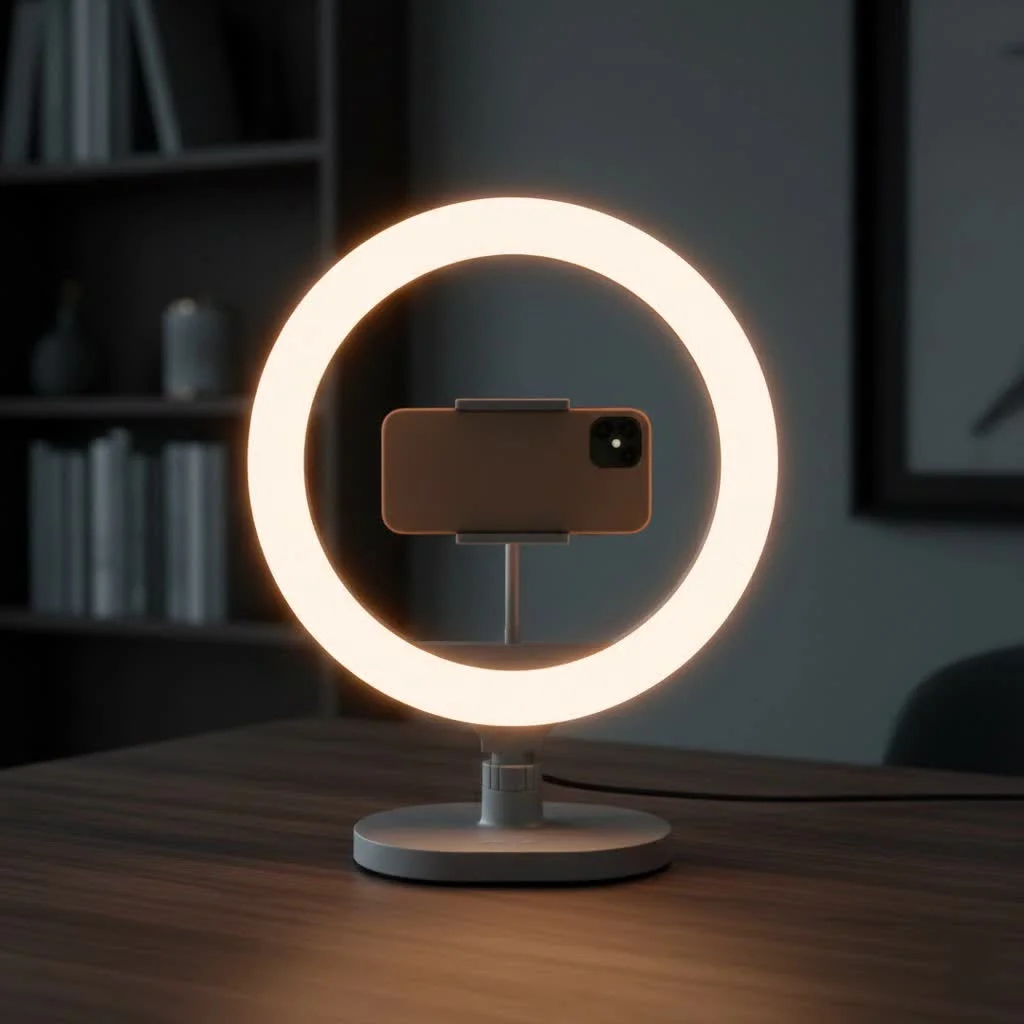
At its simplest, a ring light is a circular light source designed to provide even, shadowless illumination by wrapping light around a subject. The magic comes from the type of bulb used. Historically, fluorescent tubes were common, but today, the landscape is dominated by a more efficient and versatile technology.
The Modern Standard: LED Bulbs
Light Emitting Diodes (LEDs) are the reigning champions in ring lights, and for good reason. Instead of a single large tube, an LED ring light is composed of many small bulbs arranged in a circle. This design offers several distinct advantages:
- Energy Efficiency: LEDs consume significantly less power than their fluorescent counterparts, making them a more eco-friendly and cost-effective option in the long run.
- Longevity: An LED bulb’s lifespan is exceptionally long, often lasting for tens of thousands of hours. This means less frequent replacements and more consistent performance.
- Durability: Being solid-state components, LEDs are much more resistant to shock and impact than fragile glass fluorescent tubes.
- Advanced Features: LED technology makes it easier to incorporate features like dimmability and adjustable color temperature, giving you precise control over your lighting environment.
The Classic Choice: Fluorescent Bulbs
Before LEDs became ubiquitous, the circular fluorescent tube was the standard for ring lights. It consists of a single glass tube shaped into a circle, which produces a soft, continuous stream of light. While largely replaced by LEDs, you might still encounter them in older or specialized models. They produce a beautiful quality of light but come with drawbacks, including being more fragile, having a shorter lifespan, and typically lacking the advanced control features of modern LED ring lights.
As lighting specialist James Peterson notes, “The shift from fluorescent to LED wasn’t just an upgrade; it was a revolution for creators. The level of granular control over brightness and warmth that LED ring light bulbs provide allows for an artistic expression that simply wasn’t possible with older, fixed-temperature fluorescent tubes.”
How to Choose the Right Ring Light Bulb for Your Needs
When you’re selecting a ring light or a replacement bulb, the technical specifications can seem daunting. Let’s break down the three most important factors that will determine the quality and character of your light.
Brightness and Power (Lumens and Watts)
|
Our Picks for the Best Ring Light in 2026
As an Amazon Associate I earn from qualifying purchases.
|
||
| Num | Product | Action |
|---|---|---|
| 1 | 10\" Selfie Ring Light with 73\" Tripod Stand & 1 Phone Holder, LED Camera Ringlight with 48 RGB Colors Modes & Musical Rhythm Mode and 12 Brightness Dimmable for TikTok/Makeup/Photography/Vlog |

|
| 2 | Upgraded Ring Light for Laptop, Monitor, Desk & Phone – Eye-Caring LED Webcam Light with Screen-Safe Clip, Adjustable Monitor Mount, 50 Lighting Modes, Computer Light for Zoom, Streaming, Video Calls |
|
| 3 | Sensyne 10\'\' Ring Light with 50\'\' Extendable Tripod Stand, LED Circle Lights with Phone Holder for Live Stream/Makeup/YouTube Video/TikTok, Compatible with All Phones |
|
| 4 | EMART 10\" Ring Light with 55\" Extendable Tripod Stands and Phone Holder, Dimmable LED Circle Round Light for Selfie Camera Photography/Makeup/YouTube Video/Vlogging/Live Streaming |
|
| 5 | NEEWER Basics 10\" Selfie Ring Light with Tripod Stand/3 Phone Holders Compatible with iPhone/3 Cold Shoes/Remote, LED Ringlight Lighting for YouTube TikTok Vlog Video Recording Makeup Streaming, R11 |
|
| 6 | Weilisi 12\'\' Ring Light with Stand 72\'\' Tall & 2 Phone Holders,38 Color Modes Selfie Light with Tripod Stand, Big LED Ring Light for iPhone/Android/Camera,YouTube,Makeup |
|
| 7 | Weilisi 10\" Ring Light with Stand 72\'\' Tall & Phone Holder,38 Color Modes Selfie Light with Tripod Stand,Stepless Dimmable/Speed LED Ring Light for iPhone & Android,YouTube, Makeup,TIK Tok |
|
| 8 | UBeesize 12\'\' Selfie Ring Light with 62’’ Tripod Stand for Video Recording, Live Streaming(YouTube, Instagram, TIK Tok), Compatible with Phones, Cameras and Webcams |
|
| 9 | STALLY 10.2\" Ring Light with Stand, 75\" Tall Ring Light with Phone Holder and Wireless Remote, 12 Dimming Levels, 32 Color Modes Selfie Light Tripod for iPhone, Live Stream, Makeup, YouTube, TikTok |
|
| 10 | Aureday 14\'\' Selfie Ring Light with 62\'\' Tripod Stand and Phone Holder, Dimmable LED Phone Ringlight for Makeup/Video Recording/Photography, Circle Lighting for All Cell Phones&Lightweight Cameras |
|
Brightness is arguably the most critical feature. It’s measured in lumens, which quantifies the total amount of visible light emitted by a source. The higher the lumen count, the brighter the light. Watts, on the other hand, measure energy consumption. With LEDs, a lower wattage can produce a very high lumen output, which is a sign of high efficiency.
- For Close-Up Work (Makeup, Selfies): A ring light with a lower lumen count (around 1,500-2,500 lumens) is often sufficient.
- For Portraits and Video: Look for higher brightness levels (3,000-7,500 lumens) to ensure your subject is well-lit, even from a slight distance.
Most quality LED ring lights offer adjustable brightness (dimmability), allowing you to dial in the perfect intensity for any scene.
Color Temperature (The Kelvin Scale)
Color temperature determines the “warmth” or “coolness” of the light and is measured in Kelvin (K). It’s what gives your image its mood—from a cozy, warm glow to a crisp, neutral daylight feel.
- Warm Light (2700K – 3300K): This light has a yellowish, golden hue, similar to a traditional incandescent bulb or a sunset. It’s excellent for creating a comfortable, inviting, and intimate atmosphere.
- Neutral/Natural White (4000K – 5000K): This is a clean, white light that mimics natural daylight. It’s highly versatile and ideal for product photography and clear video conferencing where color accuracy is important.
- Cool White (5500K – 6500K): This light has a slightly bluish tint, resembling daylight on an overcast day. It creates a sharp, focused, and modern look, often used in commercial or industrial settings.
For maximum versatility, choose a bi-color LED ring light that allows you to adjust the color temperature on the fly. This feature empowers you to match the ambient light of your environment or create a specific mood for your shoot.
Color Rendering Index (CRI)
The Color Rendering Index (CRI) is a scale from 0 to 100 that measures a light source’s ability to reveal the true colors of an object compared to natural sunlight. This is a non-negotiable specification for anyone serious about visuals, especially in makeup artistry and fashion. A low CRI will make colors appear dull, washed out, or tinged with an unnatural hue.
For professional results, always look for a ring light with a CRI of 90 or higher. A high CRI ensures that skin tones look natural, makeup colors are accurate, and product colors are represented faithfully.
Replacing Your Ring Light Bulb: A Quick Guide
If you have an older fluorescent model or a rare case of a failed LED, you may need to replace the bulb. Here’s a simplified process:
- Safety First: Always unplug the ring light from its power source before attempting any maintenance.
- Identify the Bulb Type: Determine if you have a fluorescent T9 circular tube or an LED-based system. Most modern ring lights use integrated LED panels that are not user-replaceable and require professional service if they fail.
- Remove the Cover: Carefully remove the plastic diffuser that covers the bulbs. This may be held by clips or small screws.
- For Fluorescent Bulbs: The bulb is typically connected via a 4-pin connector. Gently unplug the connector and unclip the bulb from its housing.
- Install the New Bulb: Clip the new fluorescent bulb into place and re-attach the 4-pin connector securely.
- Test It: Before reassembling, plug the light in and test it to ensure it works correctly.
- Replace the Cover: Once confirmed, unplug the unit again and put the diffuser cover back on.
Frequently Asked Questions
Can I replace a fluorescent ring light bulb with an LED one?
In most cases, this is not a direct swap. Fluorescent fixtures use a ballast to regulate current, which is incompatible with most LED replacement rings. You would need a compatible LED conversion kit or, more practically, upgrade to a complete LED ring light unit.
How long do ring light bulbs last?
LED ring light bulbs have a very long lifespan, often rated for 20,000 to 50,000 hours of use. Fluorescent tubes have a much shorter life, typically lasting between 6,000 and 10,000 hours.
Are ring light bulbs universal?
No, they are not. Fluorescent bulbs come in specific diameters and pin configurations (like the T9). Integrated LED panels are almost always specific to the make and model of the ring light and are generally not interchangeable.
Why is my ring light bulb flickering?
Flickering in a fluorescent bulb often indicates it’s nearing the end of its life or there’s an issue with the ballast. In an LED ring light, flickering can be caused by an incompatible dimmer switch, a faulty power connection, or a failing driver.
The Final Word on Illumination
Your ring light is more than just a tool; it’s a creative partner. And the bulb inside is its voice. By understanding the critical role of ring light bulbs and knowing how to interpret key specifications like lumens, color temperature, and CRI, you empower yourself to move beyond generic lighting. You gain the ability to shape light with intention, ensuring that what you capture is a true and vibrant reflection of your vision. Choose wisely, and let your content shine.
Frequently Asked Questions
Can I replace a fluorescent ring light bulb with an LED one?
No, you cannot directly replace a fluorescent ring light bulb with an LED one in most cases. Fluorescent fixtures utilize a ballast that is incompatible with standard LED replacement rings, requiring either a specific LED conversion kit or a complete upgrade to an LED ring light unit.
How long do ring light bulbs typically last?
LED ring light bulbs boast a significantly longer lifespan, often rated for 20,000 to 50,000 hours of use. In contrast, older fluorescent tubes have a shorter operational life, typically lasting between 6,000 and 10,000 hours.
Are all ring light bulbs universally interchangeable?
No, ring light bulbs are not universal. Fluorescent bulbs come in specific diameters and pin configurations, such as the T9 type. Integrated LED panels, common in modern ring lights, are almost always proprietary to the specific make and model and are generally not interchangeable.
What causes a ring light bulb to flicker?
Flickering in a fluorescent ring light bulb often signals it's nearing the end of its operational life or indicates a problem with the ballast. For an LED ring light, flickering can stem from an incompatible dimmer switch, a loose power connection, or a failing LED driver component.
What is the ideal CRI for professional ring light results?
For professional results, the ideal Color Rendering Index (CRI) for a ring light is 90 or higher. A high CRI ensures that colors, especially skin tones and makeup, are accurately represented and appear natural under the light.
How to Replace a Ring Light Bulb
This guide outlines the steps to safely replace a ring light bulb, particularly for older fluorescent models or in rare cases of LED failure.
Always unplug your ring light from its power source before attempting any maintenance or bulb replacement. This prevents electrical shock and ensures your safety during the process.
Determine if your ring light uses a fluorescent T9 circular tube or an integrated LED system. Most modern LED ring lights have non-user-replaceable panels, requiring professional service if they fail.
Carefully remove the plastic diffuser that covers the bulbs. This cover is typically held in place by clips or small screws, which need to be gently detached.
For fluorescent bulbs, gently unplug the 4-pin connector and unclip the old bulb from its housing. Clip the new fluorescent bulb into place and securely re-attach the 4-pin connector.
Before reassembling, plug the light in and test it to ensure the new bulb works correctly. Once confirmed, unplug the unit again and carefully put the diffuser cover back on.
Get our weekly buyer guide
Practical specs, not advice. Unsubscribe anytime.
I recently upgraded my old fluorescent ring light to an LED model, and the difference is night and day! The adjustable color temperature has been a game-changer for my makeup tutorials. I can finally match the lighting to different looks without any weird color casts. Definitely worth the investment for anyone serious about their content.
I’ve been using a ring light for a while, but I never really understood the specs until now. The explanation about CRI of 90+ really helped me understand why some of my older videos looked a bit off. My new bulbs have a high CRI, and my product shots look so much more vibrant and true to color. Wish I’d known this sooner!
The dimmability feature on my new ring light is great for different times of day, but I found that the lowest setting is still a bit too bright for some of my close-up work. It’s not a huge deal, and the overall quality of the light is good, but I was hoping for a wider range of brightness control. Still, the energy efficiency of the LEDs is a big plus.
As someone who does a lot of live streaming, having reliable and consistent lighting is crucial. The longevity of these LED bulbs is fantastic; I don’t have to worry about them burning out in the middle of a session like my old ones used to. Plus, the shadowless illumination really makes a difference in how professional my streams look.