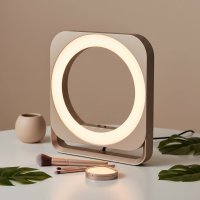
Perfect makeup application starts with one crucial, often overlooked element: lighting. You can have the most expensive foundations and the most pigmented eyeshadows, but without the right light, achieving a flawless, true-to-color finish is nearly impossible. This is where a ring light for makeup transforms from a simple accessory into an indispensable tool. As a professional with over a decade in the beauty and photography industry, I’ve seen firsthand how the right illumination can make the difference between a good makeup look and a spectacular one. It eliminates shadows, reveals true colors, and provides the perfect canvas for your artistry.
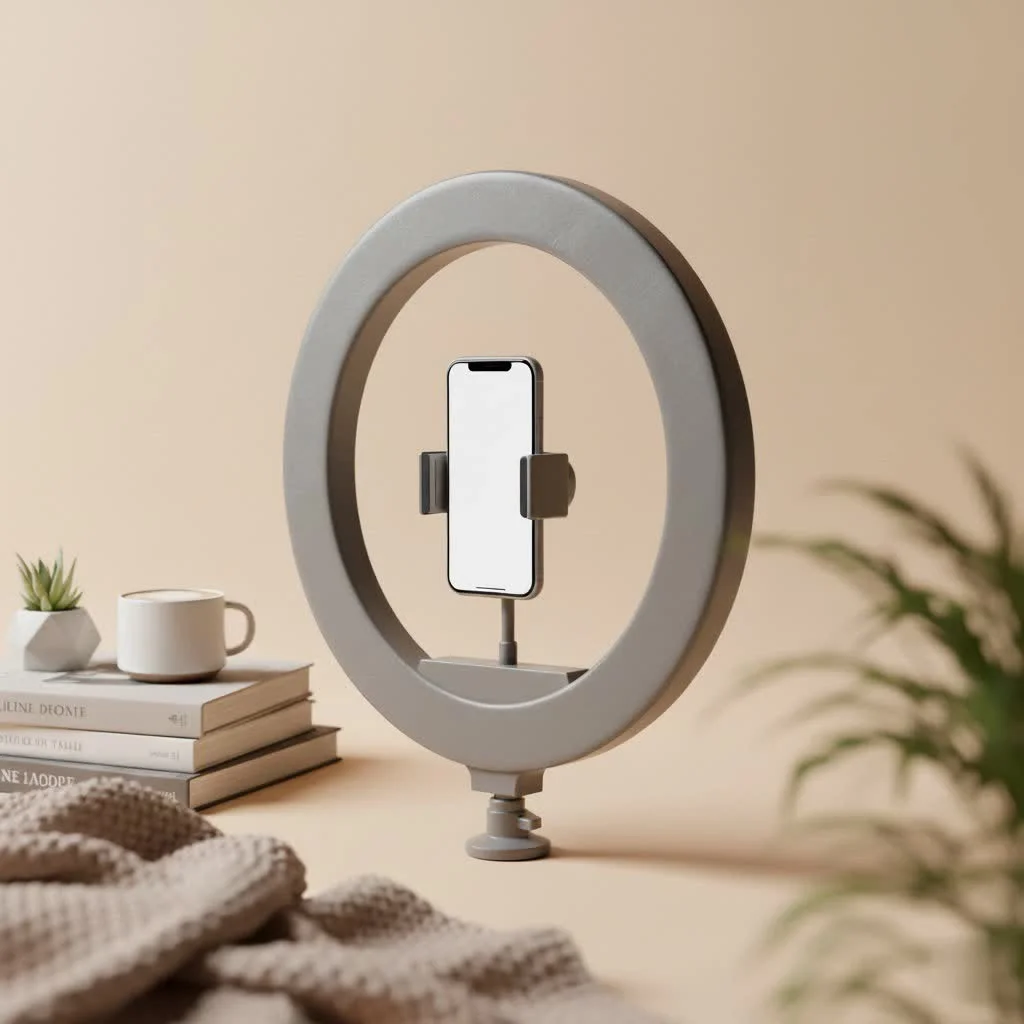
Whether you’re a professional makeup artist, a beauty influencer, or simply someone who wants their makeup to look impeccable every day, understanding how to choose and use a ring light is a game-changer. This guide will walk you through everything you need to know, from the technical specs that matter to the practical tips that will elevate your makeup game.
Why is a Ring Light a Makeup Artist’s Best Friend?
Before we dive into the technical details, let’s talk about why a ring light is the gold standard for makeup lighting. Unlike a standard lamp or overhead lighting, which casts harsh shadows and can distort colors, a ring light provides a soft, uniform blanket of light that wraps around your face.
- Shadowless Illumination: The circular design emits light from all directions, canceling out the shadows that can make blending difficult and hide details. This means you can see exactly where you’re placing contour, blush, and highlighter for a perfectly sculpted look.
- True Color Representation: Bad lighting can make your foundation look orange or your eyeshadow appear dull. A quality ring light, especially one with a high Color Rendering Index (CRI), shows colors accurately, ensuring your makeup looks just as good in daylight as it does in front of your vanity.
- Reduces Eye Strain: Applying intricate details like eyeliner requires focus. The bright, diffused light from a ring light illuminates your workspace without being harsh, reducing strain on your eyes during long makeup sessions.
- The Signature “Catchlight”: For those who photograph or film their looks, the ring light creates a beautiful, circular reflection in the eyes, known as a catchlight. This adds a professional, captivating sparkle that makes the eyes pop.
As celebrity makeup artist, Isabella Chen, often says, “Your tools are only as good as your light. A ring light isn’t a luxury; it’s a fundamental tool for color accuracy and flawless blending. It’s like having perfect daylight available on demand.”
Key Features in a Ring Light for Makeup
Navigating the world of ring lights can be overwhelming with all the different specs and features. Let’s break down the most important ones to consider for makeup application.
Brightness and Dimmability
|
Our Picks for the Best Ring Light in 2026
As an Amazon Associate I earn from qualifying purchases.
|
||
| Num | Product | Action |
|---|---|---|
| 1 | NEEWER Basics 10\" Selfie Ring Light with Tripod Stand/3 Phone Holders Compatible with iPhone/3 Cold Shoes/Remote, LED Ringlight Lighting for YouTube TikTok Vlog Video Recording Makeup Streaming, R11 |

|
| 2 | Sensyne 10\'\' Ring Light with 50\'\' Extendable Tripod Stand, LED Circle Lights with Phone Holder for Live Stream/Makeup/YouTube Video/TikTok, Compatible with All Phones |
|
| 3 | EMART 10\" Ring Light with 55\" Extendable Tripod Stands and Phone Holder, Dimmable LED Circle Round Light for Selfie Camera Photography/Makeup/YouTube Video/Vlogging/Live Streaming |
|
| 4 | 10\" Selfie Ring Light with 73\" Tripod Stand & 1 Phone Holder, LED Camera Ringlight with 48 RGB Colors Modes & Musical Rhythm Mode and 12 Brightness Dimmable for TikTok/Makeup/Photography/Vlog |
|
| 5 | Weilisi 12\'\' Ring Light with Stand 72\'\' Tall & 2 Phone Holders,38 Color Modes Selfie Light with Tripod Stand, Big LED Ring Light for iPhone/Android/Camera,YouTube,Makeup |
|
| 6 | Weilisi 10\" Ring Light with Stand 72\'\' Tall & Phone Holder,38 Color Modes Selfie Light with Tripod Stand,Stepless Dimmable/Speed LED Ring Light for iPhone & Android,YouTube, Makeup,TIK Tok |
|
| 7 | UBeesize 12\'\' Selfie Ring Light with 62’’ Tripod Stand for Video Recording, Live Streaming(YouTube, Instagram, TIK Tok), Compatible with Phones, Cameras and Webcams |
|
| 8 | STALLY 10.2\" Ring Light with Stand, 75\" Tall Ring Light with Phone Holder and Wireless Remote, 12 Dimming Levels, 32 Color Modes Selfie Light Tripod for iPhone, Live Stream, Makeup, YouTube, TikTok |
|
| 9 | Upgraded Ring Light for Laptop, Monitor, Desk & Phone – Eye-Caring LED Webcam Light with Screen-Safe Clip, Adjustable Monitor Mount, 50 Lighting Modes, Computer Light for Zoom, Streaming, Video Calls |
|
| 10 | Aureday 14\'\' Selfie Ring Light with 62\'\' Tripod Stand and Phone Holder, Dimmable LED Phone Ringlight for Makeup/Video Recording/Photography, Circle Lighting for All Cell Phones&Lightweight Cameras |
|
Brightness, often measured in lumens or watts, is crucial. You need a light that is powerful enough to illuminate your entire face clearly, but not so bright that it’s blinding. Look for a ring light with adjustable brightness settings, or a “dimmable” feature. This allows you to customize the light intensity for different tasks—a softer light for general application and a brighter setting for detailed work like winged eyeliner or eyebrow shaping.
Color Temperature
Color temperature, measured in Kelvin (K), dictates whether the light appears warm (yellowish) or cool (bluish). This is arguably the most critical feature for makeup.
- Warm Light (2700K – 3300K): Creates a cozy, inviting glow but can make your skin tone appear more yellow, leading to over-correction with foundation.
- Neutral/Natural Daylight (5000K – 5500K): This is the sweet spot for makeup. It mimics natural daylight, providing the most accurate color representation. It allows you to see your makeup exactly as it will appear outdoors.
- Cool Light (6000K – 6500K): This light has a blueish tint and can be very harsh, making skin look washed out. It’s generally not recommended for makeup application.
Always choose a ring light for makeup that offers adjustable color temperature, so you can switch to a neutral, daylight setting for application.
Color Rendering Index (CRI)
The CRI is a scale from 0 to 100 that measures how accurately a light source reveals the true colors of an object compared to natural light. For makeup, this is non-negotiable. A low CRI light can make your foundation look dull and your eyeshadow shades appear different from how they look in the pan. Always look for a ring light with a CRI of 90 or higher to ensure what you see in the mirror is what everyone else will see in person.
Size and Portability
Ring lights come in various sizes, typically ranging from 10 inches to 18 inches in diameter.
- 10-12 inches: These are great for personal use and are often more portable. They provide enough light for applying makeup to your own face.
- 14-18 inches: These larger lights are preferred by professional makeup artists as they provide a broader, softer light source that can illuminate a client’s entire face and décolletage.
Consider where you’ll be using it. If you have a dedicated vanity, a larger, stand-mounted light is ideal. If you’re a freelance artist who travels, a smaller, more portable model might be a better fit.
How to Use Your Ring Light for Flawless Application
Owning the perfect ring light for makeup is only half the battle; knowing how to use it correctly is what creates the magic.
- Position it Correctly: Place the ring light directly in front of your face, not above or below. Your face should be in the center of the ring. This positioning ensures the light hits you head-on, eliminating all shadows.
- Set the Right Height: The center of the ring light should be at eye level. If it’s too high, it will create shadows under your eyes and nose. If it’s too low, it will cast shadows upward, which is equally unflattering.
- Find the Perfect Distance: Don’t sit too close or too far away. A good rule of thumb is to be about arm’s length from the light. This provides a soft, even glow. For more detailed work, you can move a little closer, but be sure to adjust the brightness to avoid glare.
- Calibrate Your Settings: Before starting, set your light to a neutral daylight color temperature (around 5500K) and adjust the brightness to a comfortable level. This creates your baseline for perfect, true-to-color application.
Frequently Asked Questions (FAQ)
What size ring light is best for makeup?
For personal use at a vanity, a 12 to 14-inch ring light is an excellent choice, providing ample coverage for your face. Professional makeup artists often prefer larger 18-inch models for a broader and softer light source suitable for clients.
Is a warm or cool ring light better for makeup?
Neither. The best light for makeup application is a neutral or natural daylight setting, typically between 5000K and 5500K. This color temperature mimics natural sunlight, ensuring the most accurate color representation for foundation, concealer, and other products.
How far should a ring light be for makeup application?
Position the ring light about 2 to 3 feet (arm’s length) away from your face. This distance provides a soft, flattering, and even illumination without being too harsh. You can move closer for detailed work, but you may need to dim the light slightly.
Do I need a ring light with an included mirror?
While not essential, a ring light that comes with a magnifying mirror attachment can be incredibly helpful for precision tasks like applying eyeliner, defining eyebrows, or placing false lashes. It’s a convenient feature that enhances the tool’s functionality.
Can I use a ring light for both makeup and selfies?
Absolutely! That’s one of their greatest advantages. A good ring light for makeup is also the perfect tool for taking high-quality photos and videos of your finished look, providing that professional, well-lit quality that stands out on social media.
The Final Word
Investing in a quality ring light for makeup is one of the single best decisions you can make to elevate your beauty routine. It takes the guesswork out of color matching and blending, providing a consistent, reliable light source that empowers you to create your best work. By focusing on key features like adjustable color temperature, high CRI, and appropriate brightness, you can find a tool that will serve you for years to come. Now, go forth and glow with the confidence that your makeup looks truly flawless.
Get our weekly buyer guide
Practical specs, not advice. Unsubscribe anytime.