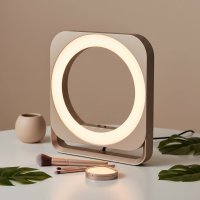
Great lighting is no longer a luxury for streamers; it’s a necessity. In the competitive world of live streaming, how you present yourself visually can be the difference between gaining a new subscriber and having a viewer click away. While you might have the best webcam and a crystal-clear microphone, poor lighting can ruin the entire experience. This is where finding the best ring light for streaming becomes a game-changer, instantly elevating your production value from amateur to professional. It’s the secret weapon that top-tier streamers on Twitch, YouTube, and other platforms use to achieve that flawless, shadow-free look that keeps viewers engaged.
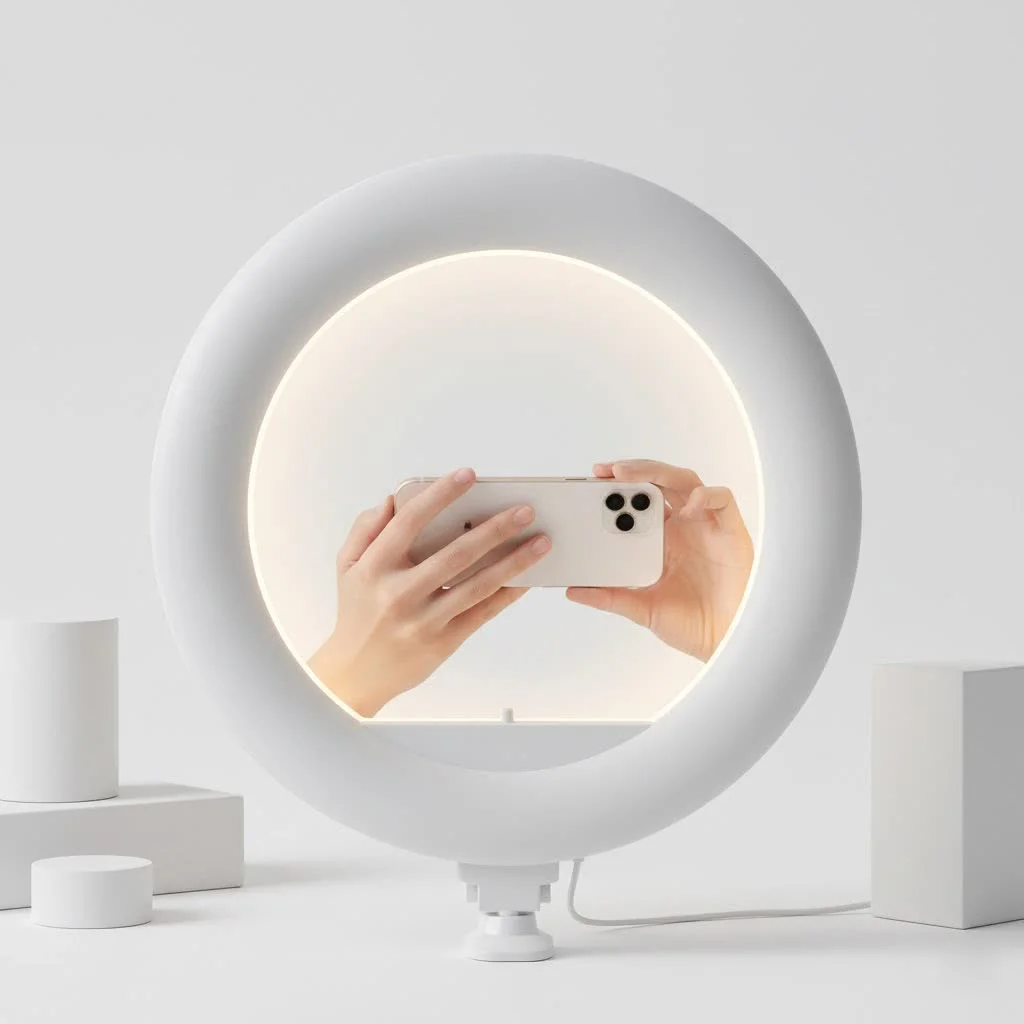
As a professional photographer and content creator with over a decade of experience, I’ve seen firsthand how the right light can transform content. A ring light isn’t just about making you brighter; it’s about sculpting your appearance, creating captivating catchlights in your eyes, and ensuring your audience sees every reaction clearly. This guide will walk you through everything you need to know to select the perfect lighting companion for your streaming career. For expert ring lights reviews on this site.
Why is a Ring Light Essential for Your Streaming Setup?
A ring light is a circular lighting tool that provides soft, direct, and uniform illumination onto a subject. Its unique shape is designed to be placed directly in front of you, with your camera or webcam positioned in the center. This setup offers several key advantages that are tailor-made for streamers.
First, it eliminates harsh shadows. Traditional lighting from a single source, like a desk lamp or an overhead room light, often casts unflattering shadows on your face, particularly under the eyes and nose. A ring light surrounds your face with a “wrap-around” light, filling in those shadows for a clean, professional, and more approachable look.
Second, it creates the iconic “catchlight.” This is the circular reflection of the light source in your eyes, which makes them appear more vibrant, focused, and full of life. It’s a subtle detail that significantly boosts engagement by making you appear more connected to your audience.
Finally, it provides consistent, controllable light. Unlike natural light, which changes throughout the day, a ring light offers a reliable source of illumination that you can adjust to perfectly match your environment and skin tone, ensuring you look your best no matter when you go live.
How to Choose the Best Ring Light for Streaming
Navigating the market can be overwhelming with all the different sizes, features, and technical specifications. Let’s break down the most important factors to consider to ensure you invest in a tool that truly meets your needs.
Size Matters: Finding the Right Diameter
|
Our Picks for the Best Ring Light in 2026
As an Amazon Associate I earn from qualifying purchases.
|
||
| Num | Product | Action |
|---|---|---|
| 1 | UBeesize 12\'\' Selfie Ring Light with 62’’ Tripod Stand for Video Recording, Live Streaming(YouTube, Instagram, TIK Tok), Compatible with Phones, Cameras and Webcams |

|
| 2 | Upgraded Ring Light for Laptop, Monitor, Desk & Phone – Eye-Caring LED Webcam Light with Screen-Safe Clip, Adjustable Monitor Mount, 50 Lighting Modes, Computer Light for Zoom, Streaming, Video Calls |
|
| 3 | NEEWER Basics 10\" Selfie Ring Light with Tripod Stand/3 Phone Holders Compatible with iPhone/3 Cold Shoes/Remote, LED Ringlight Lighting for YouTube TikTok Vlog Video Recording Makeup Streaming, R11 |
|
| 4 | Sensyne 10\'\' Ring Light with 50\'\' Extendable Tripod Stand, LED Circle Lights with Phone Holder for Live Stream/Makeup/YouTube Video/TikTok, Compatible with All Phones |
|
| 5 | 10\" Selfie Ring Light with 73\" Tripod Stand & 1 Phone Holder, LED Camera Ringlight with 48 RGB Colors Modes & Musical Rhythm Mode and 12 Brightness Dimmable for TikTok/Makeup/Photography/Vlog |
|
| 6 | Weilisi 12\'\' Ring Light with Stand 72\'\' Tall & 2 Phone Holders,38 Color Modes Selfie Light with Tripod Stand, Big LED Ring Light for iPhone/Android/Camera,YouTube,Makeup |
|
| 7 | EMART 10\" Ring Light with 55\" Extendable Tripod Stands and Phone Holder, Dimmable LED Circle Round Light for Selfie Camera Photography/Makeup/YouTube Video/Vlogging/Live Streaming |
|
| 8 | Aureday 14\'\' Selfie Ring Light with 62\'\' Tripod Stand and Phone Holder, Dimmable LED Phone Ringlight for Makeup/Video Recording/Photography, Circle Lighting for All Cell Phones&Lightweight Cameras |
|
| 9 | Weilisi 10\" Ring Light with Stand 72\'\' Tall & Phone Holder,38 Color Modes Selfie Light with Tripod Stand,Stepless Dimmable/Speed LED Ring Light for iPhone & Android,YouTube, Makeup,TIK Tok |
|
| 10 | STALLY 10.2\" Ring Light with Stand, 75\" Tall Ring Light with Phone Holder and Wireless Remote, 12 Dimming Levels, 32 Color Modes Selfie Light Tripod for iPhone, Live Stream, Makeup, YouTube, TikTok |
|
The size of a ring light, measured by its diameter, directly impacts the softness and spread of the light.
- Small (8-12 inches): These are great for tight spaces or as a secondary light source. They are portable and often less expensive, but the light can be more focused and less forgiving. They are best suited for close-up shots where only your head and shoulders are in the frame.
- Medium (14-16 inches): This is often considered the sweet spot for many streamers. A 14-inch ring light provides a good balance of soft, flattering light that can cover your upper body without being too cumbersome on your desk.
- Large (18 inches and up): An 18-inch or larger ring light delivers the softest, most wrap-around light, ideal for full-body shots or streamers who want the most professional, studio-quality illumination. However, they require more space and a sturdy stand.
Pro Tip: As a general rule, a larger ring light placed further away will create a softer and more natural-looking light than a smaller one placed very close to your face.
Brightness and Power (Lumens & Dimmability)
Brightness is crucial for overcoming ambient room light and properly exposing your face for the camera. Look for a ring light with a wide dimming range, typically from 1% to 100%. This allows you to precisely control the intensity. You don’t always need to be at full power; having the flexibility to dial it down is just as important as having the power to go bright. A light that is too bright will cause you to squint and can wash out your features.
Color Temperature Control
Color temperature determines whether the light appears warm (yellowish) or cool (bluish), measured in Kelvin (K). The ability to adjust this is non-negotiable for a serious streamer.
- Bi-Color (Adjustable Kelvin): The best ring light for streaming will be bi-color, allowing you to adjust the temperature from around 3000K (warm, tungsten light) to 6000K (cool, daylight) or higher. This feature is essential for matching the light in your room and achieving a natural skin tone on camera.
- RGB: For streamers who want to add a creative flair, some ring lights offer full RGB (Red, Green, Blue) capabilities. This allows you to introduce any color into your lighting setup, which can be used to match your on-screen graphics, brand colors, or create a specific mood for your stream.
Color Rendering Index (CRI)
CRI is a measure of how accurately a light source reveals the true colors of an object compared to natural sunlight. A higher CRI rating means more accurate colors. For streaming, you should look for a ring light with a CRI of 95 or higher. A low CRI can make your skin tones look unnatural, dull, or even discolored, no matter how much you tweak your camera settings. This is a pro-level spec that makes a huge difference in quality.
“Streamers often forget that their light source is just as important as their camera. A high-CRI ring light is the foundation of a great image; it ensures that what your audience sees is vibrant and true-to-life. Don’t compromise on color accuracy.” – Alex ‘Pixel’ Chen, Professional Streaming Consultant
Mounts and Stand Compatibility
Consider how the ring light will integrate into your existing setup.
- Desk Mounts: Many smaller ring lights come with small tripods or clamps that attach directly to your desk. These are space-saving but can be less stable.
- Floor Stands: Larger ring lights almost always come with a dedicated floor stand. Ensure the stand is sturdy, adjustable in height, and has a stable base to prevent it from tipping over.
- Camera & Phone Holders: Check that the included mounting options are compatible with your device, whether it’s a DSLR, a mirrorless camera, or a smartphone. A flexible gooseneck arm for a phone or a solid ball head mount for a camera is a great feature to have.
Setting Up Your Ring Light for the Perfect Stream
Simply buying the best ring light for streaming is only half the battle; you also need to position it correctly.
- Positioning: Place the ring light directly in front of your face, with your camera lens peeking through the center. This is the classic setup for achieving that signature shadowless look and eye catchlight.
- Height: Adjust the stand so the center of the ring light is at your eye level. If it’s too high, it will create shadows under your chin. If it’s too low, it can create an unflattering “monster lighting” effect from below.
- Distance: The distance affects the hardness of the light. Start by placing the light about arm’s length away. Move it closer for a more intense, high-key look, or further away for a softer, more subtle effect.
- Angle: While the head-on position is standard, don’t be afraid to experiment. Angling the ring light slightly off to one side can create a gentle modeling of your facial features, adding a bit of depth while still serving as your main light source (key light).
- Balancing with Other Lights: Turn off any distracting overhead lights or lamps that might be casting competing shadows or have a different color temperature. Your ring light should be the dominant light source on your face. You can use other lights, like RGB strips or practical lamps, to add color and depth to your background.
Frequently Asked Questions (FAQ)
What size ring light is best for streaming?
For most desktop streamers, a 14 to 16-inch ring light offers the best combination of soft, flattering light and a manageable size. If you have limited space, a 12-inch model can work well, while those wanting a premium, studio-look should consider an 18-inch model.
How bright should a ring light be for streaming?
Look for a ring light that is fully dimmable from 1% to 100%. You don’t need a specific lumen count, but rather the flexibility to adjust the brightness to match your environment, camera sensitivity, and desired look without it being overpowering.
Do I need an RGB ring light for streaming?
An RGB ring light is not essential, but it is a great feature for creative expression. A standard bi-color ring light that adjusts between warm and cool white light is more critical for achieving a professional, natural look. RGB is a “nice-to-have” for adding colorful background effects or mood lighting.
Can I use a ring light if I wear glasses?
Yes, but you may need to make some adjustments to avoid glare. Try raising the ring light slightly higher than eye level and tilting it downward. This changes the angle of reflection so the light doesn’t bounce directly back into the camera lens from your glasses.
Is a ring light better than a softbox for streaming?
Both are excellent tools. A ring light is prized for its ease of use, space-saving design, and the beautiful catchlights it creates. A softbox produces an even softer light and offers more control over shaping, but it takes up significantly more space. For most desktop streamers, a ring light is the more practical and effective solution.
Conclusion
Choosing the best ring light for streaming is a critical investment in your channel’s visual quality. It’s a single piece of equipment that can dramatically improve your appearance, professionalism, and audience engagement. By focusing on the key features—size, dimmability, adjustable color temperature, and a high CRI—you can find a light that will serve you well as you grow your channel. Remember that good lighting makes you look more confident and allows your personality to shine through without being masked by poor video quality. Now, go find your perfect light and get ready to create your best content yet.
Get our weekly buyer guide
Practical specs, not advice. Unsubscribe anytime.